Pere Portabella makes films that reject the premises of plot-based cinema in favour of constant experimentation with poetry, music, theatre and audiovisual media. His films also negate anecdote as the organisational element of storylines. Right from the start, aesthetics and politics were inseparably bound together in the work of Portabella, who was one of the key figures in the development of independent and alternative film. This distinctive trait expressed his de-institutionalised position within cultural politics during the Franco era and the transition to democracy. This anthology of essays offers an insight into MACBA’s role in recovering and studying Portabella’s films. It includes articles by Juan Miguel Company, Víctor Ferris, Francisco Javier Gómez Tarín, Josep Miquel Martí Rom, Pilar Parcerisas, Julio Pérez Perucha, Jonathan Rosenbaum, Casimiro Torreiro, Santos Zunzunegui and others.

Historias sin argumento. El cine de Pere Portabella
artist
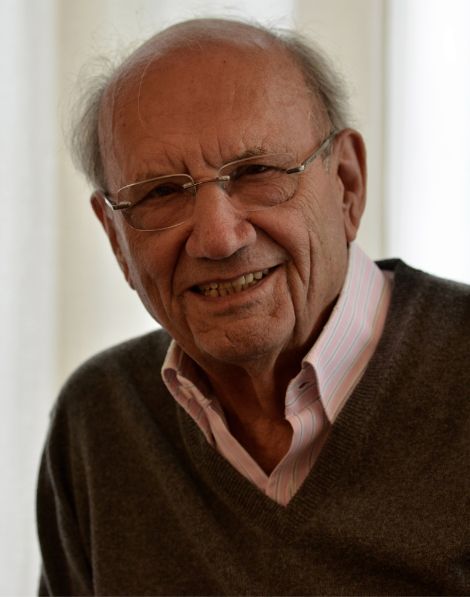
Pere Portabella (Figueres, 1927) has been an important presence in the world of Spanish cinema, both as producer and film-maker, since the 1960s. As a producer in the 1950s, Portabella promoted, through Films 59, some of the cornerstone productions of Spanish cinema's ‘realismo crítico’: of particular note are films like Carlos Saura's Los golfos (1959) Marco Ferreri's El cochecito (1960) and Luis Buñuel's Viridiana (1961). At the end of the 1970s he was involved in the formation of the Barcelona School. His first films as director were written in collaboration with the poet Joan Brossa, and brought together the catalan avant-garde heritage fostered by Dau al Set and the iconoclastic languages which came one after another onto the international scene during the seventies, and became known as 'new cinema'. Films from this period include No compteu amb els dits (1967) and Nocturn 29 (1968), which would mark the beginning of his unbroken collaboration with the musician Carles Santos. During the first half of the 1970s, Pere Portabella became a key figure in the development of an independent, alternative, clandestine cinema, whose cinematographic work was inextricably linked to his political stance of opposition to Franco's regime. Films like Vampir-Cuadecuc (1970), Umbracle (1971-1972) or his series of shorts about Joan Miró, along with his participation in the Grup de Treball were radical interventions in the cinema and art worlds.
After directing Informe general (1976) Portabella took a break from his film career and dedicated himself to the world of politics and governmental institutions during the time of the Spanish transition to democracy. After this interval he resumed his work as a film-maker on films like Pont de Varsòvia (1989) and as a producer on, among others, José Luis Guerín's Tren de sombras (1997). Since the year 2000, Portabella's film career has had an international recognition in the circuits of contemporary art. In 2000, the MACBA put on the exhibition project Plotless Stories. The Cinema of Pere Portabella, a project that travelled in 2003 to Paris' Musée National Centre Georges Pompidou. In 2002 he was the only Spanish artist invited to documenta II in Kassel. In 2007, the MOMA in New York projected his filmography. Since then, he has received numerous recognitions and has presented retrospectives, including Tate in London (2011), Cinemateca Portuguesa in Lisboa (2017), Movie Mutations Zagreb (2019), Festival Internacional de Cine (FICUNAM) in Mexico (2019), Whitechapel Gallery in London (2019) and Close-Up Film Centre in London (2020). During 2026 and 2027, ‘Acció Portabella’ is being held, the international programme of initiatives around Pere Portabella on the occasion of his hundredth anniversary.
Filmography
Feature films: No compteu amb els dits (1967), Nocturn 29 (1968), Vampir-Cuadecuc (1970), Umbracle (1972), El sopar (1974-2018), Informe general (1976), Pont de Varsòvia (1989), Die Stille vor Bach (2007) and Informe general II. El nou rapte d’Europa (2015).
Short films: Miró l'altre (1969), Aidez l'Espagne (1969), Premios Nacionales (1970), Play Back (1970), Poetes catalans (1973), Miró tapís (1972), Miró la forja (1973), Acció Santos (1973), Literatura, Made in Barcelona (1992), Cròniques de la veritat oculta. Pròleg (1996), Art a Catalunya (2003), La tempesta (2003), Lectura Brossa (2004), P.H.N. (Plan Hidrológico Nacional) within the collective film Hay motivo (2004), Visca el piano! (No al no) (2006), Mudanza (2008) and Uno de aquellos (2010).
www.pereportabella.com [Search: 13 July, 2026]

Plotless Stories
The Films of Pere Portabella
exhibition
RELATED PUBLICATIONS


