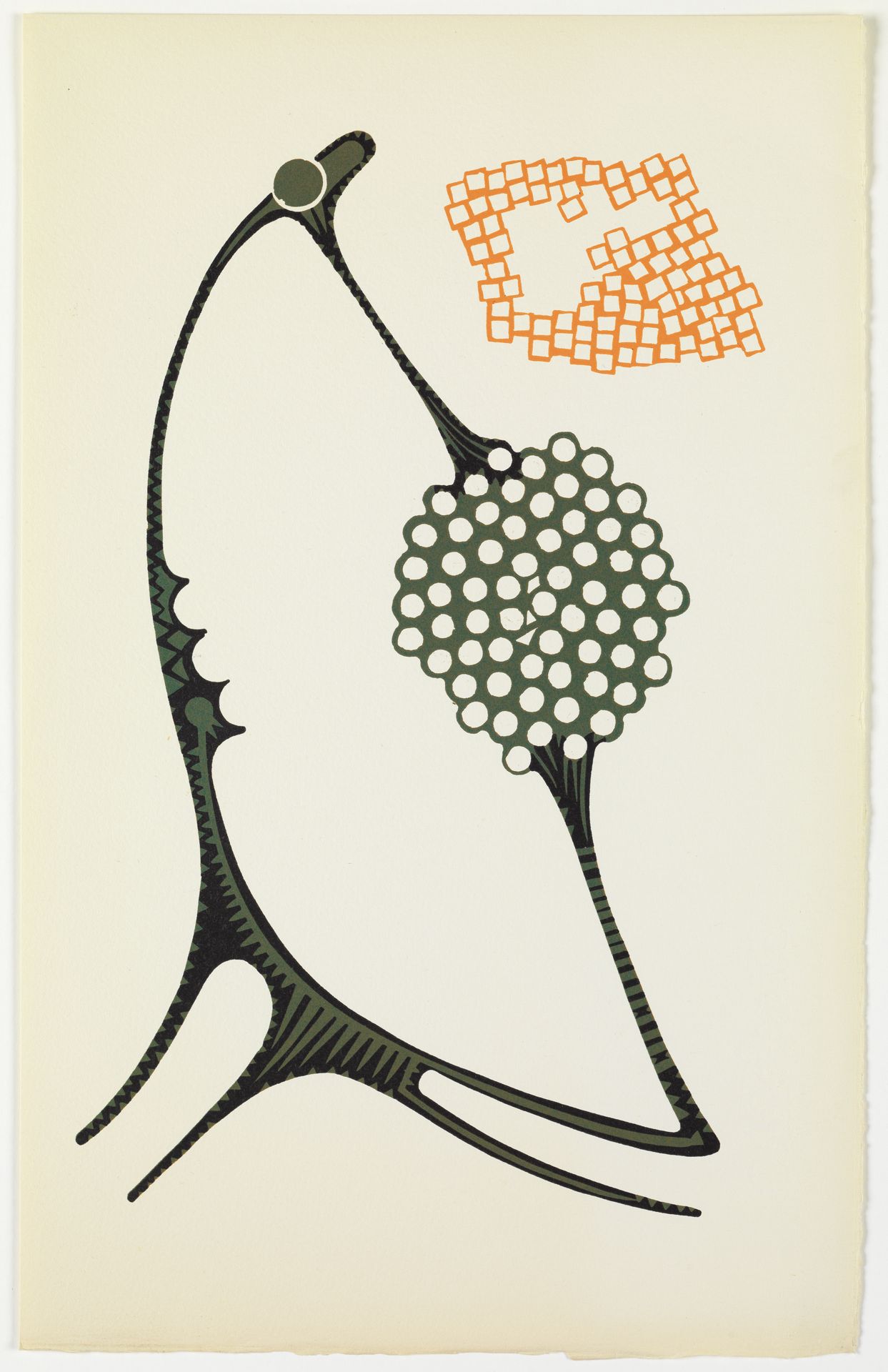
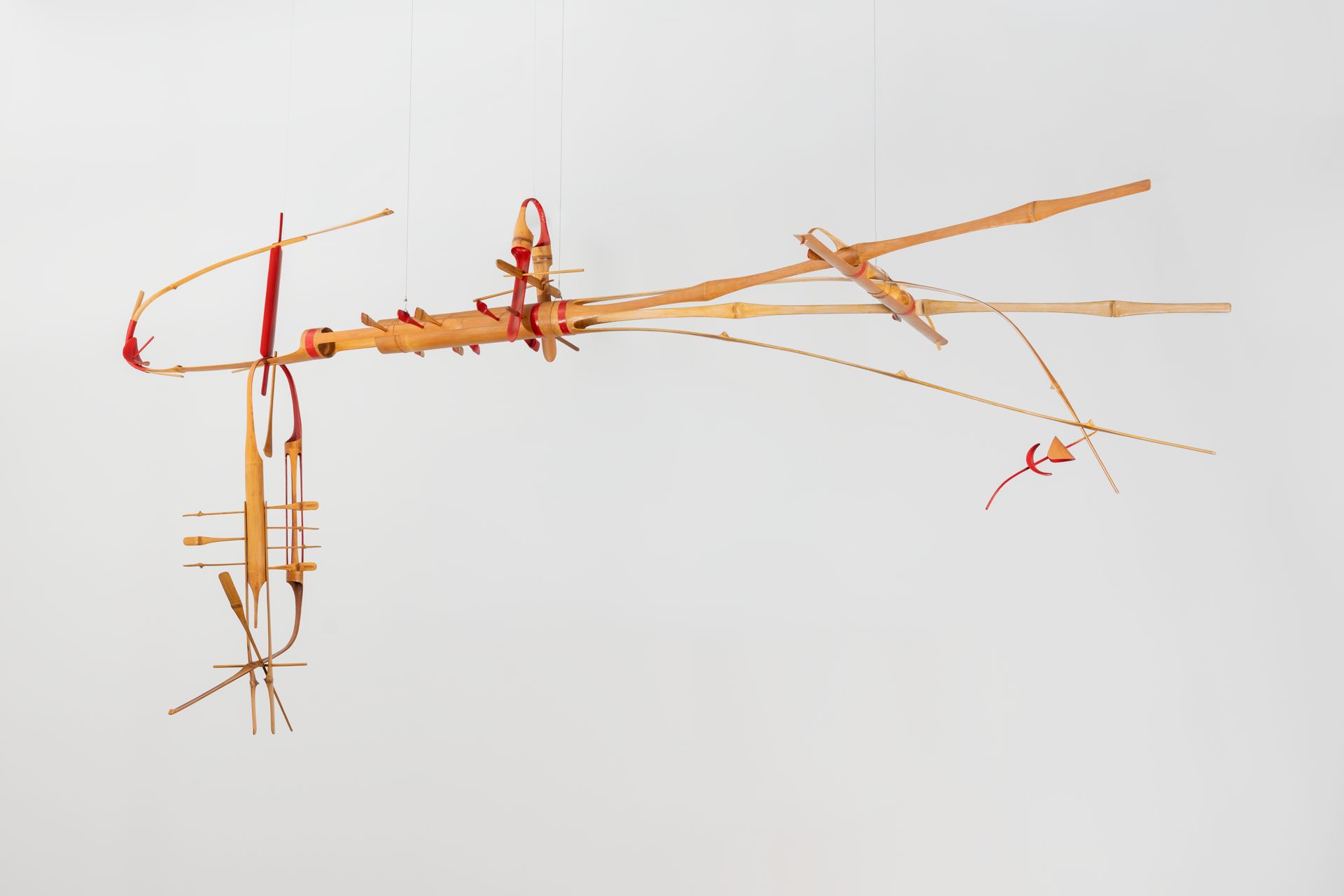
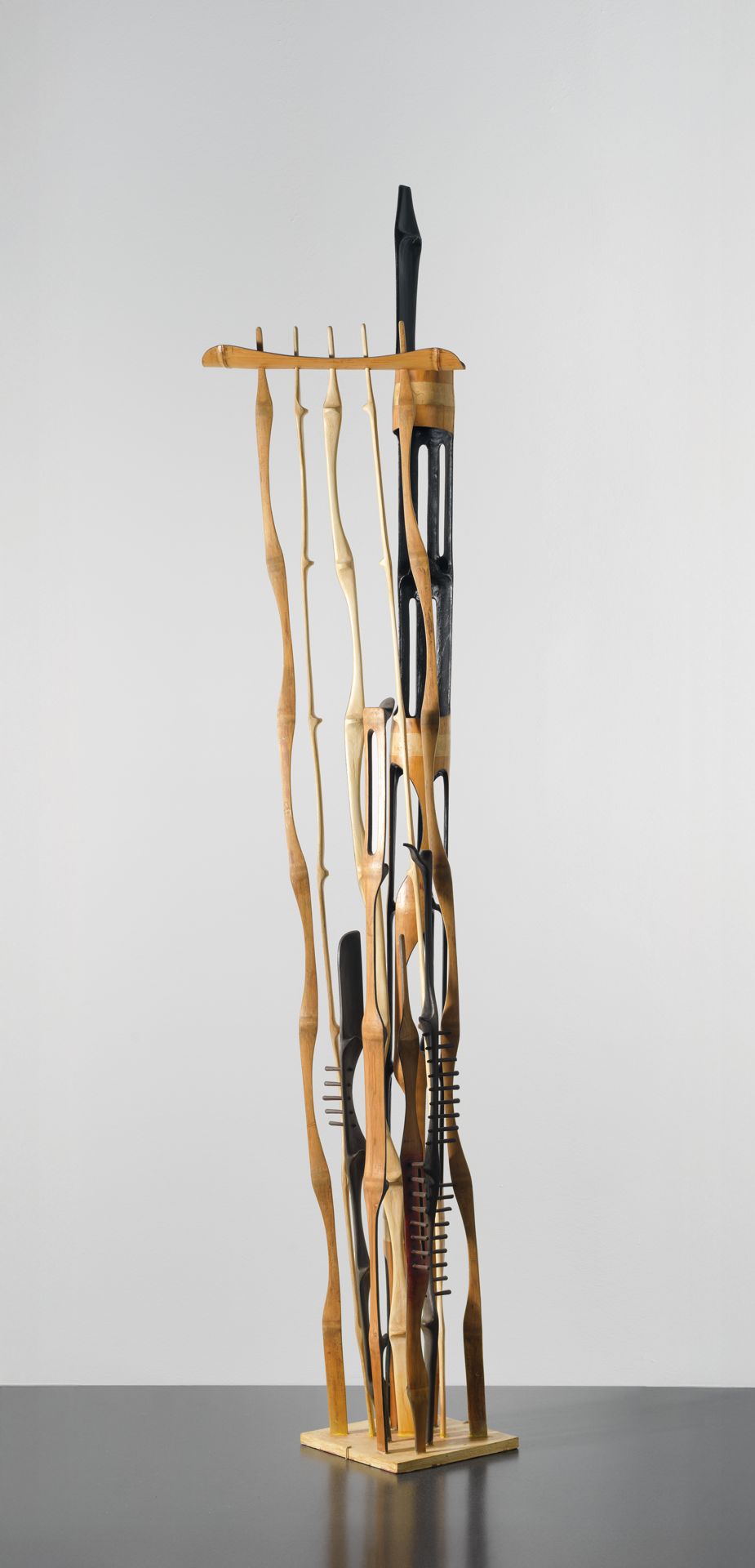
Moisès Villèlia trained at his father's woodcarving workshop. His work reflected the influence of popular crafts and the art of the avant-garde. Besides his significant sculptural production, he is also known as a poet. Following in the wake of artistic referents such as Àngel Ferrant, Alberto, Julio González, Alberto Giacometti and Russian Constructivism, he abandoned Informalism in favour of a more conceptual approach guided by Eastern philosophy, a constant in Villèlia since his first readings as a teenager. A critic of Franco's dictatorship, he joined Club 49, a group that promoted modernism during the darkest years of post-Civil War Spain. During the 1960s and early 1970s, he lived in Paris, Quito and Buenos Aires, before returning to Catalonia. Although initially he worked with wood and, for economic reasons, cheaper materials such as thread, wire and buttons, and organic materials such as pumpkin, his work is mostly known for his use of bamboo, whose lightness and flexibility allowed him to create aerial sculptures of great subtlety and personality, reflecting his interest in the plasticity of the void. Influenced by Àngel Ferrant and Alexander Calder, Villèlia constructed aerial forms in space and floating structures, as well as spiderweb-like forms and carvings. Spaces, voids, movement, organic bodies and shadows that make up his lightweight sculptures in a natural manner.
After his first solo exhibition at the Museu de Mataró (1954), Villèlia formed Art Actual, a group of artists that exhibited regularly in this museum. In 1958, he exhibited his work with reeds for the first time at the Sala Gaspar, Barcelona, a material that would become his signature means of expression. A year later, he exhibited again at the Museu de Mataró, this time with great success: Joan Prats brought Joan Miró and Pierre Matisse, and from there arose his first collaborations with architects, opening up to new materials such as concrete, wrought iron, or fibre cement. Noteworthy among his long list of exhibitions are the retrospectives held at Espais. Centre d'Art Contemporani, Girona (1990), Institut Valencià d'Art Modern, Valencia (1999), Fontana d'Or, Girona (2005), and Museu Can Mario, Palafrugell (2014). His work is included in the collections of Museu Nacional d'Art de Catalunya, Barcelona; Museo Nacional Cento de Arte Reina Sofía, Madrid; Artium, Vitoria-Gasteiz; Institut Valencià d'Art Modern, Valencia; Albright-Knox, Buffalo, USA; Wilhelm Lehmbruck Museum, Duisburg, Germany; and MACBA, Barcelona, among others.
To consider: we document the MACBA Collection through detailed research. In the event that there are any mistakes, we would appreciate being notified.
works